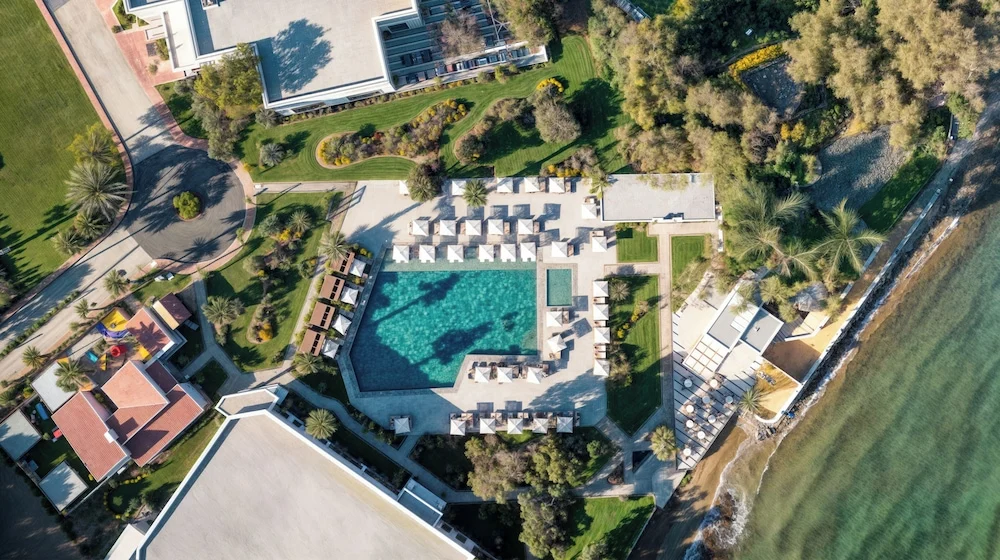
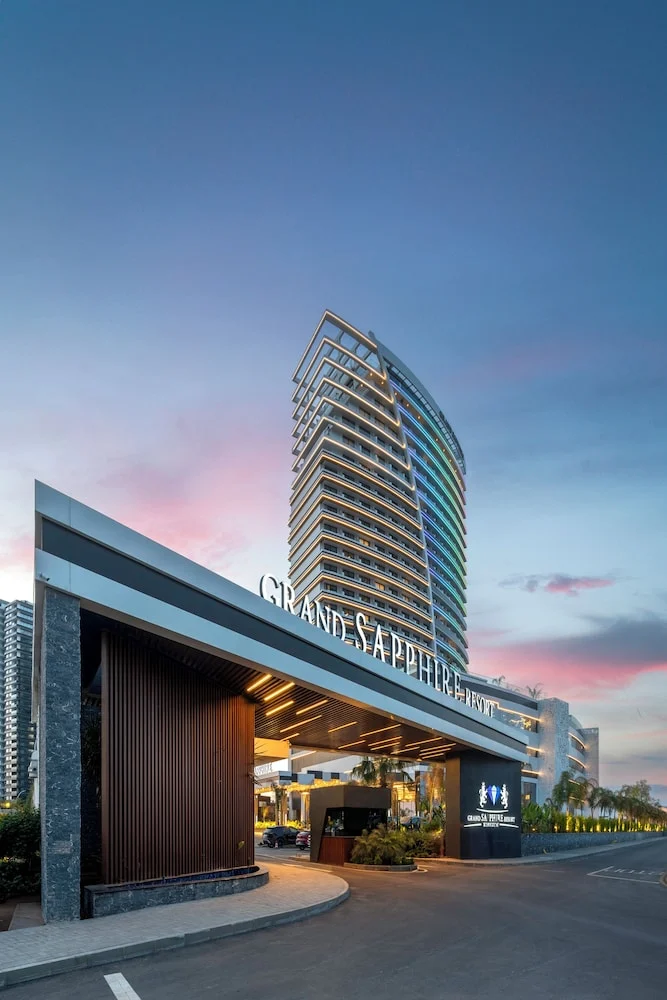
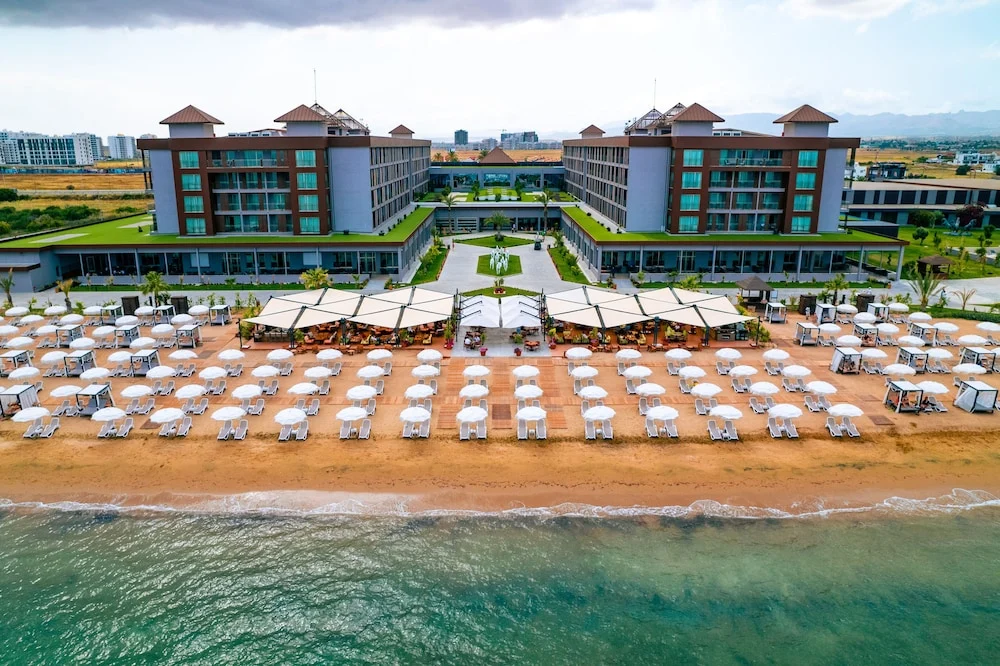
Merit Royal Gardens Hotel & Casino se află în Trikomo, Cipru. Acest hotel de lux are 79 de camere și o terasă cu grădină cu vedere la mare.
Familii cu copii
Hotelul este ideal pentru familii și oferă o creșă și o piscină pentru copii. Dacă vrei să te relaxezi, centrul spa te așteaptă.
Dotări și caracteristici
Check-in / check-out
14:00 / 12:00
Număr maxim de persoane pe cameră
2
Priveliști
Vedere la mare
Număr de camere
79
Plata la hotel
Visa, Maestro, American Express, Mastercard, în numerar
Facilități
Aer condiționat în camerăBalconBarSală de conferințeParcare gratuităWi-Fi gratuitRestaurantFumat permisSpa & wellnessTransferMașină de spălatPiscină
Copii
CreșăAnimatie pentru copiiPiscină pentru copiiPotrivit pentru copiiLoc de joacă
We had a great stay at the hotel. Thanks to Bedran for looking after us in the restaurant, along with Gengis, Gohkan, Gulen and Cemil.
The room and the food was excellent and the service throughout our stay was spot on. The concept of the restaurant was amazing, à la carte offerings at an all inclusive.
A special mention to Chem, who was always friendly and helpful when taking us to and from the restaurant. A credit to the hotel.
Thank you for a lovely holiday!
Everything was perfect- the rooms, the food, the pool, cleanness. The employees were very kind and helpful especially Bedran. The all inclusive concept differs from other hotels and we totally liked it, we felt we were in an all inclusive luxury restaurant.
Absolutely stunning hidden place by the beach with a new Bar called Zaia. Service is great, music is moderate noise and I also love the spa beside. Highly recommend 👌
I went there with the in-laws as a group of 7. The hotel was not so crowded with garden concept. The concept is all inclusive, however the meal in the restaurant is ala carte instead of open buffet. I actually love it better since we can order anything we want but with more finese of Michelin. star restaurant. We were not so lucky with the weather, therefore no chance to swim at the pool or at the beach. Cutting 1 star from location since no indoor pool, therefore very limited activity during bad weather day.
I have had an absolutely wonderful holiday here at Merit Garden in North Cyprus. It's the ultimate relaxation: breathtaking sea views, glorious sunshine, delicious food, and truly excellent service. This place is a perfect getaway!
Moscheea lui Lala Mustafa Pașa este o moschee din orașul Famagusta din estul Ciprului. Este cea mai mare clădire medievală din acest oraș, fiind inițial o catedrală romano-catolică, devenită apoi moschee în timpul dominației otomane.
Kantara Castle (Greek: Κάστρο της Καντάρας Turkish: Kantara Kalesi) is a castle in Cyprus, in the area controlled by Northern Cyprus. The exact date of its construction is unknown, the most plausible theory being the Byzantine period. It combines Byzantine and Frankish architectural elements, became derelict in 1525 and was dismantled in 1560.
Enkomi (Greek: Έγκωμη; Turkish: Tuzla) is a village near Famagusta in Cyprus. It is a short distance from a prominent 2nd millennium BC archaeological site also named Enkomi. Enkomi is under the de facto control of Northern Cyprus.
Famagusta Bay (Greek: Κόλπος της Αμμοχώστου, Turkish: Mağusa Körfezi) is the easternmost body of water that is formed by the Karpasia peninsula and Protaras. It is named after the city of Famagusta, which lies almost right in the middle of the bay. The ancient city-state of Salamis also is found on the bay, north of Famagusta.
Othello Castle (Greek: Πύργος του Oθέλλου, Turkish: Othello Kalesi), also known as Othello's Tower, is a castle in Famagusta, in the eastern part of Cyprus. It was built by the Lusignans in the 14th century, and was later modified by the Venetians. The modern name of the castle comes from a stage note in Shakespeare's play Othello.
The monastery of Saint Barnabas (or Ayios Barnabas) was a church on the island of Cyprus, 2 kilometres (1.2 mi) west of Constantia. Today the site is in Northern Cyprus and functions as a museum. The original shrine church was founded in the late fifth century, perhaps in 477, when the Emperor Zeno financed the construction of a basilica near the spot where the body of Barnabas was discovered by A