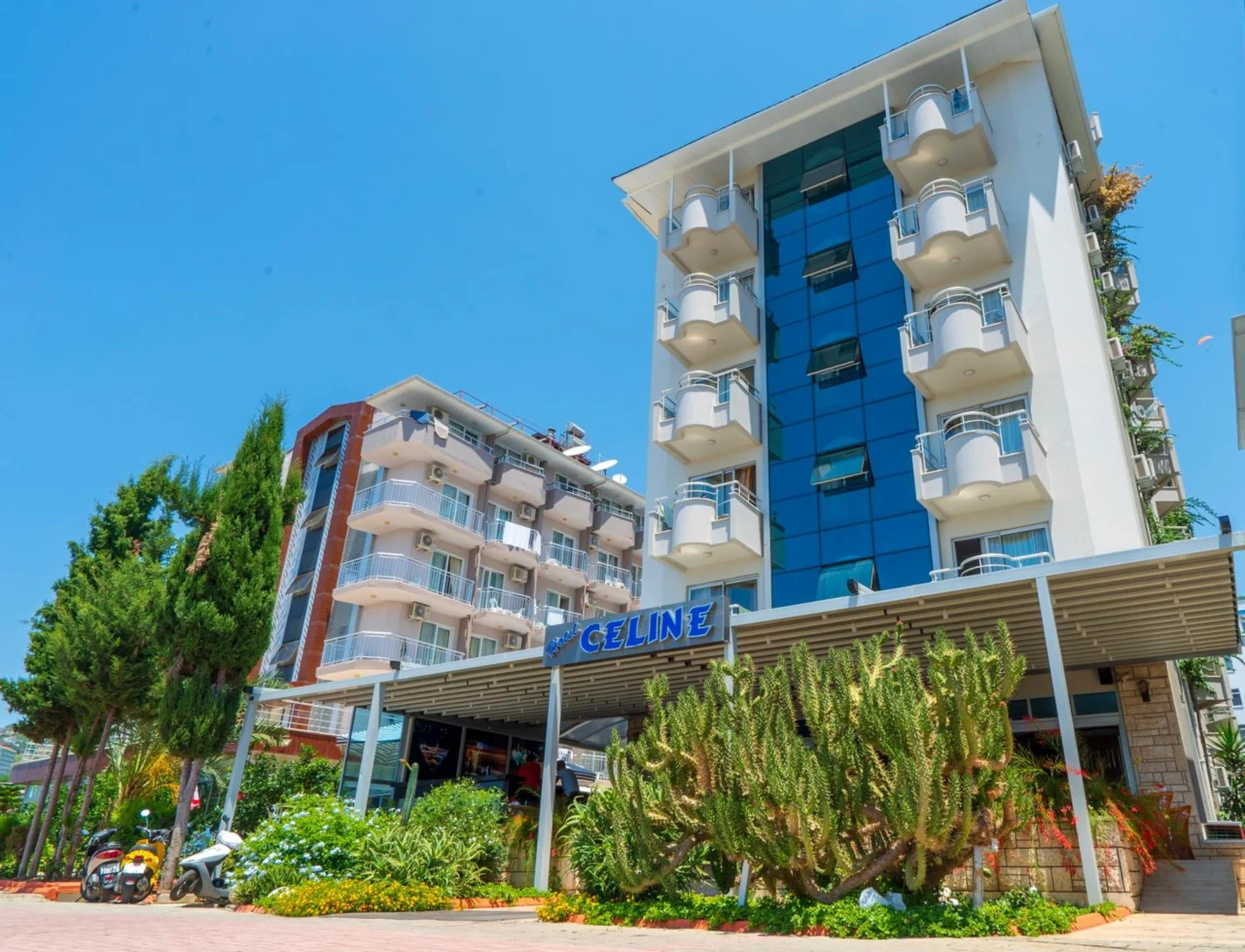
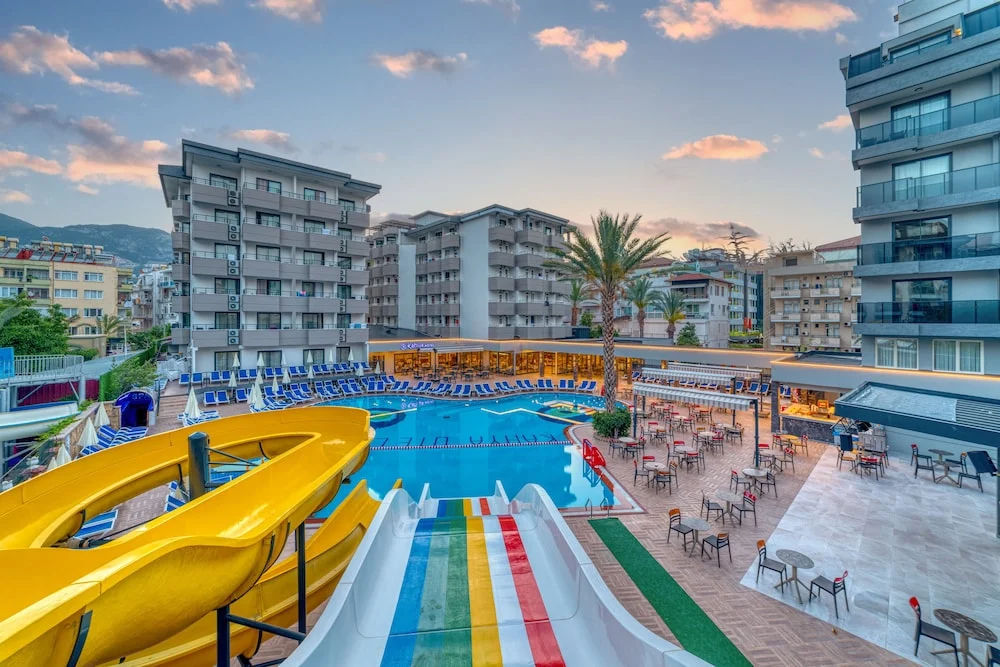
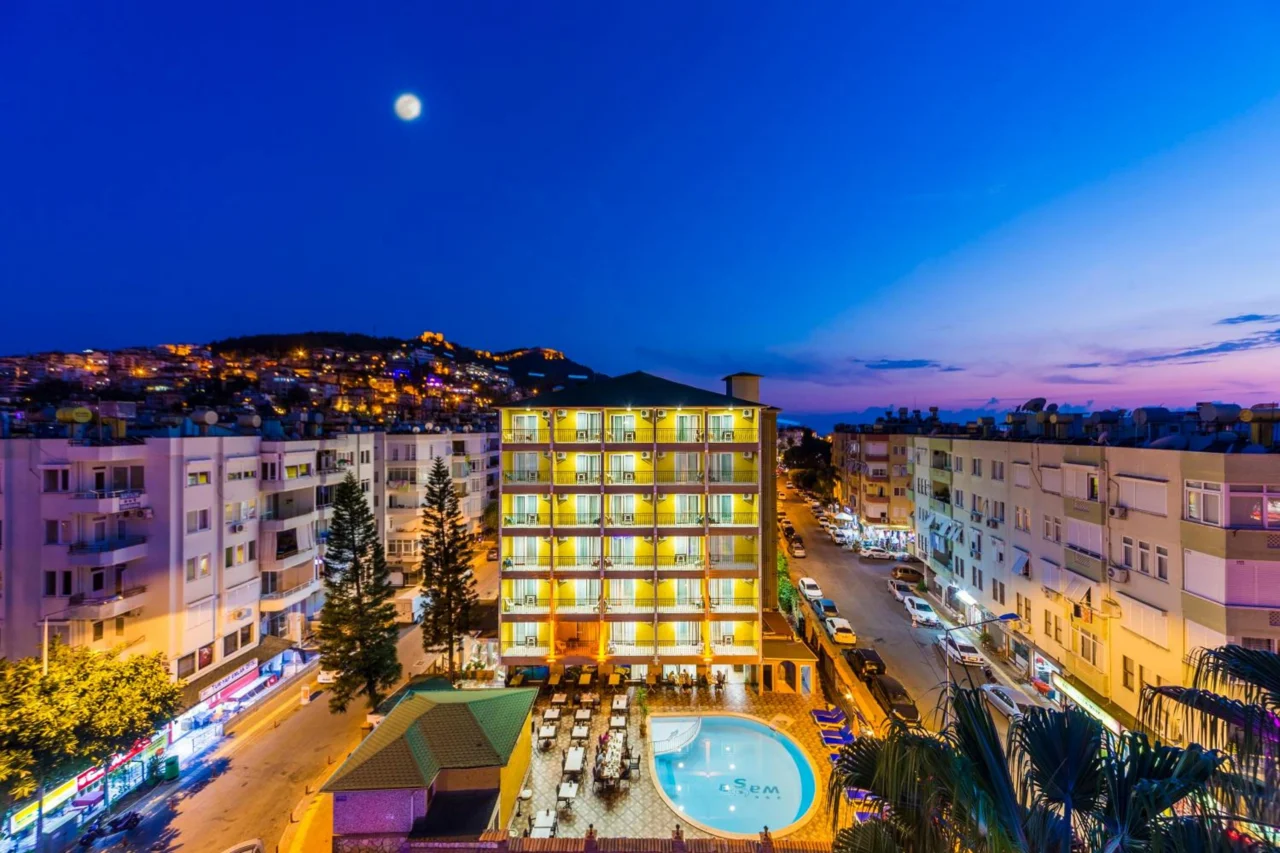
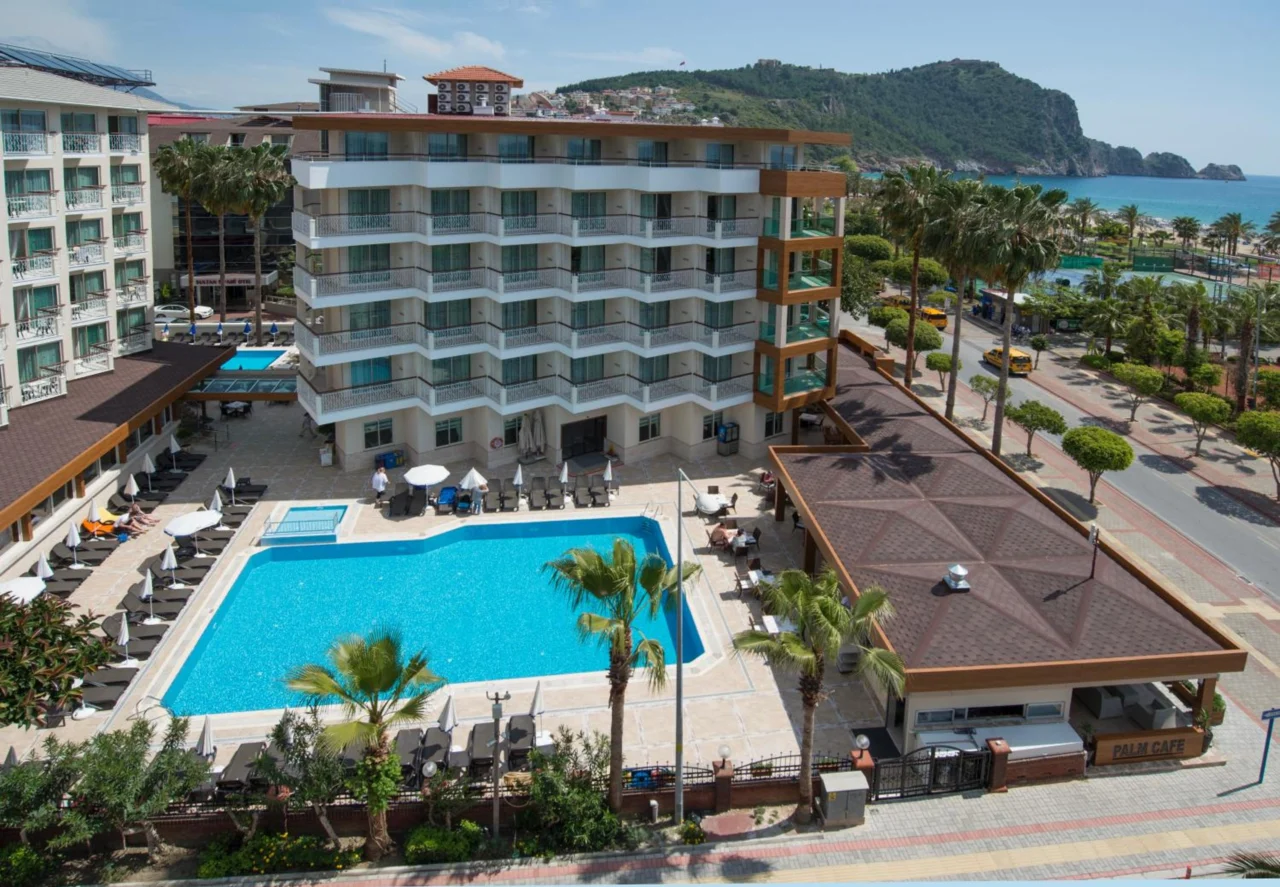
O Kleopatra Celine Hotel está localizado diretamente na praia em Alanya. Este hotel de 67 quartos possui um restaurante, um bar e um terraço com uma vista magnífica para o mar.
Dias de praia despreocupados para a família
As famílias podem aproveitar uma piscina infantil e quartos com ar-condicionado. Wi-Fi gratuito e estacionamento são convenientes quando você viaja com crianças.
Comodidades e características
Check-in / check-out
14:00 / 12:00
Número máximo de pessoas por quarto
4
Vistas
Vista para o mar
Número de quartos
67
Ano de fabrico
1999 (remodelado 2012)
Pagamento no hotel
Visa, Mastercard
Número de pessoas
3 pessoas4 pessoas
Localização
Em frente à praiaJardim / terraçoVista para o mar.
Comodidades
Ar condicionado (quarto)BarEstacionamento grátisWi-Fi grátisRestauranteSpa e bem-estarTransferênciaPiscina
Had a weeks stay and have to say the staff where very friendly, helpful and polite, food is nice but my daughter has had a stomach ache a few times but has been fine, the do have English options outside but it’s very only like 1/2 dishes. Everything is in walking distance shops, mini supermarket, beach is across the road but please be careful NOT to send your children across that road by themselves, they just honk, you also need water socks for the beach as the sand is like lava in August, overall I’m very pleased with the service I received at this hotel.
The staff is really hardworking and helpful. The cleaning is also successful. I would like to thank all the staff. Also the beds are of good quality. The location of the hotel is also nice. The rooms are of standard size, the air conditioning is quiet and sufficient. The hotel is right next to the beach. You can take long walks here. We liked the food very much. However, the elevator and the pool are a bit small.Additionally, the price to rent two sun loungers and two umbrellas on the beach is 10 Euros.
We stayed at this hotel for 10 nights, only 2 of those days our room got cleaned however hair balls were found in the toilet the mirrors never got cleaned the cleaning standards even after the cleaner came in was disgusting. The food was the same thing every day with not many options or change. We booked a double bedroom and got given 2 single beds. The staff at the hotel spoke little to 0 english meaning when we were ordering drinks they could not understand a word we were saying and the more we tried to explain what it was that we would have liked to drink they got mad. The customer service from the staff were rude and ignorant. No entertainment on the night, no snacks during the daytime. The Wifi never seemed to work in or outside of the hotel and overall the hotel just wasn’t very accommodating which was upsetting. my girlfriend got stomach ache off every meal and was throwing up.
We were in this hotel for 1 week. The hotel is clean, in a beautiful location by the beach. But unfortunately we did not feel comfortable. We paid ALL INCLUSIVE, the food was repeated over 1 day, whenever you need a drink the bar is closed. (Breakfast was from 08:00-10:00, I asked the waiter for a glass of Coca-Cola at 09:50 and he refused me, told me the bar was closed) Congratulations on exceptions, but unfortunately some of the employees are arrogant, such as the first shift receptionist, and it is difficult to understand how he speaks English (he does not know). We would not recommend this hotel, never there again. (The refrigerator in the room does not cool, the air conditioning does not even feel like it is working)
Just returned from this huge letdown. Very rude personnel. The so called “welcome guy” behaved the way we had not booked the room at all. Water in the room shower was just poor, all our faces got many pimples and allergic. Very uncomfortable place point, too far from normal Damlatac beach. The beach on the other road side is very dirty and full of stones. This is not AI at all. You have to pay basically for everything: water, beach towels, sunbeds… highly don’t recommend. WiFi does not work.
O Castelo de Alânia (em turco: Alanya Kalesi) é um castelo medieval na cidade de Alânia, no sul da Turquia. A maior parte do castelo foi construído no século XIII pelos turcos seljúcidas do Sultanato de Rum, cujo líder Caicobado I conquistou Alânia em 1220. As obras de então incluíram também a construção da Kızıl Kule (Torre Vermelha), um dos símbolos da cidade.
A Kızıl Kule (Torre Vermelha) é um dos principais monumentos da cidade de Alânia, situada à beira do Mar Mediterrâneo, no sul da Turquia. O edifício é considerado um dos símbolos da cidade e figura no logotipo da cidade. A construção da torre foi iniciada nos primeiros tempos do reinado do sultão anatólio Caicobado I, líder do Sultanato de Rum, e foi completada em 1226.
A Caverna de Damlataş (em turco: Damlataş Mağarası) é uma caverna calcária metamórfica permiana descoberta em 1948. Está localizada no porto da cidade de Alânia, na Turquia. É um ponto turístico da região e muito usada pelos locais para espeleoterapia, sob prescrição médica.
Syedra (Greek: Σύεδρα) was an ancient port city in region of ancient Cilicia, Pamphylia, or Isauria, on the southern coast of modern-day Turkey between the towns of Alanya and Gazipaşa. Syedra was settled in the 7th century BCE, and abandoned in the 13th century CE. The town had a port at sea level and an upper town 400m above. Ptolemy places it in Cilicia.
Alanya Archaeological Museum is an archaeological museum in Alanya, Turkey. The museum is divided into two sections, with displays of archaeological and ethnographic artifacts. It contains numerous ceramic, marble, bronze and glass pieces and mosaics from the Hellenistic, Roman, and Byzantine periods.
The Kuyularonu Mosque (Turkish: Kuyularönü Camii) is a mosque in Turkey situated in the city of Alanya in the province of Antalya Province. The original mosque was built in 1471, and had major restorations in 1765 and 1942. The mosque was demolished in 2005 as part of another restoration.
The Alara Castle (Turkish: Alara Kalesi), is a historic fortification located at Alanya district of Antalya Province in southern Turkey. The castle was built under the Byzantine Empire, and in the 11th century became the western outpost of the Armenian Kingdom of Cilicia (1080-1375). It had the function to safeguard the caravans from holdup robberies that were stopping over at the last caravansera